Friday, March 6, 2009

Birks Solitaire Diamond Ring

Birks Solitaire Diamond Ring North-East-South-West Position, in Platinum

This Birks exclusive diamond solitaire engagement ring is set in platinum North-East-South-West Position, features round brilliant cut Birks diamond in different carat weights, colour grade and clarity. Also available with Canadian diamond.

Starting from $2,200.00 USD

Birks Blue - Engagement Ring

BIRKS BLUE® Classic Collection, Diamond Solitaire Engagement Ring, in 18kt White Gold
Birks ultimate collection of modern and enduring classics is distinctively enhanced by the signature touch of a diamond-cut blue sapphire. It's a mark of beauty, and signifies the meticulous craftmanship and attention to detail that distinguishes every piece in the collection. BIRKS BLUE® Collection is simply the best of the best, in classics that are always in style. Featuring one round excellent-cut diamond, as well as our signature brilliant-cut accent sapphire, this solitaire diamond engagement ring is offered in 18kt white gold or in 2 tone 18kt gold or 18kt yellow gold and platinum, or in platinum, in a wide range of diamond sizes, color and clarity grades. Birks Canadian-mined diamonds are also available.

Starting from $1,200.00 USD

Amorique Diamond and Platinum Ring

THE AMORIQUE DIAMOND® Collection Solitaire Diamond Engagement Ring in Platinum
The ultimate cushion-shape fancy-cut diamond, this exciting modern creation represents the union of Birks expertise and design innovation, using the latest diamond cutting technology. At its heart, a star-shaped pattern of facets maximizes its effect for an outstanding reflection of brilliance and fire. This Birks platinum solitaire engagement ring features one solitaire diamond offered in a wide range of carat weights, colour and clarity grades, on a 2mm platinum shank.

Starting from $4,300.00 USD

Amorique Diamond Ring

THE AMORIQUE DIAMOND® Collection Solitaire Diamond Engagement Ring in Platinum
The ultimate cushion-shape fancy-cut diamond, this exciting modern creation represents the union of Birks expertise and design innovation, using the latest diamond cutting technology. At its heart, a star-shaped pattern of facets maximizes its effect for an outstanding reflection of brilliance and fire. This Birks platinum solitaire engagement ring features one solitaire diamond offered in a wide range of carat weights, colour and clarity grades.

Starting from $4200.00 USD

Sunday, March 1, 2009

Dee Beers Pave & Platinum Ring

Dee Beers are pleased to introduce the newest engagement ring to our collection. Created to celebrate the 75th Anniversary of BRIDES magazine. It is a pave and platinum engagement ring and wedding band intertwined as one. It holds a Dee Beers selected round brilliant Fire & Life diamond. A wind selection of color and clarity grades. total carat weight from 0.30 to 2.49.

Dee Beers Diamond jewellers


De Beers jewellery continues to be sold exclusively in De Beers stores around the world.

De Beers Diamond Jewellers now has 29 stores around the world including London, Paris, New York, Los Angeles, Tokyo, Kyoto and Osaka. In 2007 new stores were opened in Dubai, Japan, Korea, Las Vegas, Houston and Washington in the US.

A new men’s jewellery collection by Stephen Webster and the Ice on Fire collection were launched last year and the Talisman collection remains extremely popular, featuring rough and polished stones.

In 2008 De Beers Diamond Jewellers will open 25 new stores in prime luxury markets.

Diamond Watch from Damas

Mr. Mohammed Tawheed Abdullah, The MD of Damas Jewellers said. "Creating diamond watches is an unparalleled skill, handed down from generation to generation. Most of these watches are produced in the workshops of Geneva and consist of brilliant-cut diamonds from 0.5 to 1 carat. The setting of these noblest of all stones is designed to let the light shine unobstructed through each of its facets. Thus this magnificent gem sparkles at each turn of the wrist.

Ladies 18K Tiffany & Co. Diamond Watch


Stunning Tiffany & Co. 18K white gold Diamond Watch! Loaded with diamonds, even on the sides! This watch retails at Tiffanys for about $13,000! Own it now for a fraction! Black band has little bit of wear. Contemporary.

Daimond Watches from Tiffany & Co.

Peerless Tiffany design and pedigree Swiss mechanics. Tiffany has set the standard in watch manufacturing for 170 years.

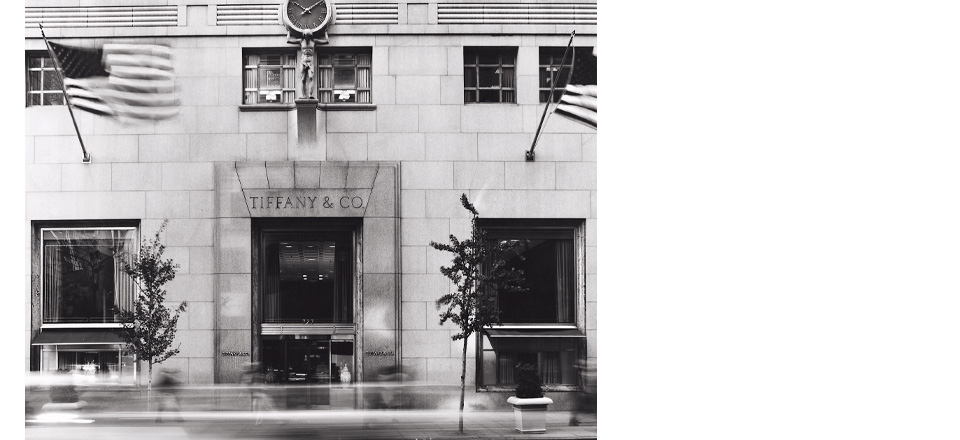
Tiffany & Co USA

It was Tiffany and Co. that introduced the engagement ring as we know it today. The celebrated six-prong “Tiffany® Setting” lifts the diamond above the band and into the light. The result is a ring whose beauty has never been equaled.

In 1848 the New York City newspapers dubbed Charles Lewis Tiffany “The King of Diamonds.” And with good reason. The quality of Tiffany diamonds was then, and remains, exemplary. In the spring of 1887, Tiffany shocked the world by purchasing the French Crown Jewels. From this time on, Tiffany became the world’s authority on the finest diamonds.

Soon Tiffany designers were creating brilliance of their own. From the glittering 1890s on, timeless Tiffany designs graced women from the finest families: the Astors, the Vanderbilts, the Morgans. Celebrities from the theater, sports and ultimately European royalty and Hollywood stars began to prize Tiffany diamond designs.

Around the world, museums treasure the Tiffany design aesthetic, from the Art Nouveau period to Art Deco to today’s modern classics. Year in, year out, the passion for Tiffany diamonds is clearly demonstrated in the world’s auction houses. Today, the world-famous 128.54-carat Tiffany Diamond is on permanent display in the New York flagship store—proof positive of Tiffany’s diamond legacy.

But nowhere is a Tiffany diamond more beautiful or more treasured than in its place of honor: on the hand of a woman

Daimond Trade

The general principles of the art of diamond trading will be considered here. I get many emails from would-be-traders who are looking to become diamond buyers. Many are often naïve to the point of dreaming with their eyes open. To help some genuine novices and to discourage some obvious dreamers, I will share some insides into a reality of diamond trade and answer most asked questions.
The diamond trade, one of the most secretive and informal business, is organized along this line:

Miner - he mines diamonds
Shop owner - he establish a licenced shop in the diamond mining area and supply various miners in exchange of diamonds they produce
Diamond dealer - he buys from many shop owners and/or miners
Diamond buyer - he visits the diamond producing regions and buys from local diamond dealers
Diamond trader - he is established in main diamond trading centers and buys from various diamond buyers, which he often finances.
Diamond cutter - he buys rough diamonds from diamond traders to cut them
Cut diamond wholesaler - he buys cut diamonds from diamond cutters and supplies local retailers or jewelry manufacturers
Jewelry maker/wholesaler - he makes or wholesales ready made jewelry
Cut diamond/jewelry retailer - he sales to final client.

Thursday, February 26, 2009

A Diamond is Forever


The De Beers Group. A largest and more reknown company deals in Diamonds. Diamonds were formed at least 990 million years ago, although some are estimated to be as many as 4.25 billion years old.

Fourth C " The Clarity "

Clarity refers to the presence of inclusions in a diamond.

Naturally-occurring features called inclusions provide a special fingerprint within the stone. Inclusions are natural identifying characteristics such as minerals or fractures, occurring while the diamond was being formed in the Earth.The majority of these natural birthmarks are invisible to the naked eye, yet they affect the way light is reflected and refracted within the stone. Inclusions appear as different shapes, such as crystals, clouds or feathers. These idiosyncrasies often add to the overall character of the diamond. Containing several birthmarks or inclusions, the Excelsior is considered one on the world's most beautiful diamonds.Most inclusions are not visible to the naked eye unless magnified.To view inclusions, gemologists need to use a magnifying loupe that allows them to see a diamond at 10x its actual size.Inclusions are ranked on a scale of perfection, known as clarity. The clarity scale, ranging from F (Flawless) to Included (I), is based on the visibility of inclusions at a magnification of 10x. Even with a loupe, the birthmarks in the VVS (Very, Very Slightly Included) to VS (Very Slightly Included) range can be very difficult to find. It is only when a diamond is graded 'I' that it is possible to see the birthmarks with the naked eye. The position of inclusions can affect the value of a diamond and you should consider the number, size, brightness, nature and position of inclusions. Some inclusions can be hidden by a mounting, and have little effect on the beauty or brilliance of a stone. An inclusion in the middle or top of a diamond could impact the dispersion of light, sometimes making the diamond less brilliant.

There are very few flawless diamonds found in nature, making these diamonds much more valuable.

Third C " The Color"

Color refers to the degree to which a diamond is colorless.

Diamonds can be found in many colors, however white-colored or colorless diamonds remain the most popular.Diamonds are graded on a color scale which ranges from D (colorless) to Z. Warmer colored diamonds (K–Z) are particularly desirable when set in yellow gold. Icy winter white colored diamonds (D–J) look stunning set in white gold or platinum. Color differences are very subtle and it is very difficult to see the difference between an E and an F, for example. Therefore, colors are graded under controlled lighting conditions and are compared to a master set for accuracy. Truly colorless stones, graded D are treasured for their rarity. Color, however, is subjective. The Incomparable, one of the world's most beautiful diamonds, contains hints of brown, smokey amber and champagne colors. Nature has also created diamonds in shades of blue, green, yellow, orange, and pink. Red is the rarest of all. These diamonds are called ‘coloured fancies’ and are extremely rare and highly treasured.

Second C " The Carat "

Carat refers to the weight of a diamond.

Often mistaken with size, carat it is actually a measure of weight.The term carat is a derivative of the word carob. Carob seeds, which are surprisingly uniform in weight, were used as a reference for diamond weight in ancient civilisations. One carob seed equalled one carat.

One carat is equivalent to 200 milligrams. One carat can also be divided into 100 ‘points’. A .75 carat diamond is the same as a 75-point or 3/4 carat diamond.Since larger diamonds are found less frequently in nature, a single 1-carat diamond will cost more than two 1/2-carat diamonds, assuming the colour, clarity and cut are the same.Cut and mounting can make a diamond appear larger or smaller than its actual weight. A diamond’s setting should always optimise its beauty.

First C "The Cut "

Cut refers to the angles and proportions of a diamond. It is the only one of the 4Cs that is influenced by the human hand.

Diamond cutting requires great skill and training. The cutter must polish tiny surfaces known as facets onto the rough diamond. This process is what creates the facets known as the crown, culet, table, girdle and pavilion of the diamond.To cut a diamond perfectly, a craftsman will often need to cut away more than 50% of the rough diamond.A well-cut diamond will internally reflect light from one mirror-like facet to another and disperse and reflect it through the top of the gem. The facets, when arranged in precise proportions, will maximize the fire life and brilliance of a diamond.A well-cut diamond will be higher in quality and value than deep or shallow-cut diamonds. Diamonds that are cut too deep or too shallow lose or leak light through the side or bottom, resulting in less brilliance and a less valuable stone. Cut also refers to the shape of a diamond – round, square, or pear, for example.Round diamonds are symmetrical and capable of reflecting nearly all the light that enters, so it is the most brilliant of all diamond shapes and follows specific proportional guidelines.Non-round shapes, also known as ‘fancy shapes’ have guidelines in order that they are considered to be well-cut.

Understanding the 4Cs

Gemmologists and jewellers assess the physical attributes of diamonds using the 4Cs classification system – cut, carat, colour and clarity.The 4Cs classification enables the comparison and valuation of diamonds. No one 'C' is more significant than another, and none will diminish in value over time. A diamond’s beauty is based on far more than these characteristics. Each one was formed billions of years ago and has travelled a long and arduous journey from deep within the Earth. And while most of a diamonds’ qualities are defined by nature, it takes a master craftsman to unlock the diamond’s true brilliance, fire and beauty.

Tips to Clean Diamond Jewelery

There are six major tips to clean your Diamond Jewelery:

1)First of all, pour some detergent into the water, and mix it till the mixture is full of lather. Remember, the warm water works best.

2) Take your diamond jeweleries, and dip it into the mixture. Leave it dipped for a while, so the dust particles may loose their strength.

3) After five minutes, rinse the jeweleries smoothly for few moments holding with your two-three fingers. While rinsing, the diamonds should be inside the mixture.

4) Now pull your jeweleries out of the detergent solution, and clean them carefully using a soft brush. The use of any hard brush will definitely end up damaging the shine further. In case of the absence of a special diamond cleaning brush, a lipstick brush or a toothbrush may prove handy.

5) Brush all the parts of your diamonds carefully, especially the back of the diamonds. The back becomes the dirtiest as it remains in the constant contact with the sweating skin.

6) Then, use a clean piece of cotton and wrap it around the diamond jeweleries, so the fabric can absorb the water left on them. It is better to leave them under the fan for a while.

Apart from using detergent solutions, one can use any ammonia-based cleaner to clean the diamonds too. Only it needs to leave the jeweleries in the ammonia solution for 5-6 hours before cleaning up with a brush.

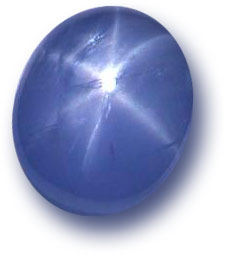
Star Sapphire

A star sapphire is a type of sapphire that exhibits a star-like phenomenon known as asterism. Star sapphires contain intersecting needle-like inclusions (often the mineral rutile, a mineral composed primarily of titanium dioxide that cause the appearance of a six-rayed 'star'-shaped pattern when viewed with a single overhead light source.

The value of a star sapphire depends not only on the carat weight of the stone but also the body color, visibility and intensity of the asterism.

The Star of India is thought to be the largest star sapphire in the world and is currently on display at the American Museum of Natural History in New York City. The 182 carat (36.4 g) Star of Bombay, housed in the National Museum of Natural History, Washington D.C., is a good example of a blue star sapphire.

Padparadscha, The Orangy-Pink

Padparadscha is a pinkish-orange to orangy-pink colored corundum, with a low to medium saturation and light tone, originally being mined in Sri Lanka, but also found in deposits in Vietnam and Africa. Padparadscha sapphires are very rare, and highly valued for their subtle blend of soft pink and orange hues. The name derives from the Sinhalese word for lotus blossom. Along with rubies they are the only corundums to be given their own name instead of being called a particular colored sapphire.

The rarest of all padparadschas is the totally natural variety, with no beryllium or other treatment, and no heating. To find a stone that is certified by a reputable lab as being completely natural is extremely rare and the stone will be very expensive. High quality, unheated and untreated natural padparadscha sapphires will start off in the range of $5,000 per carat and rise by size, color, tone, cut, and clarity, to $20,000–30,000 per carat.